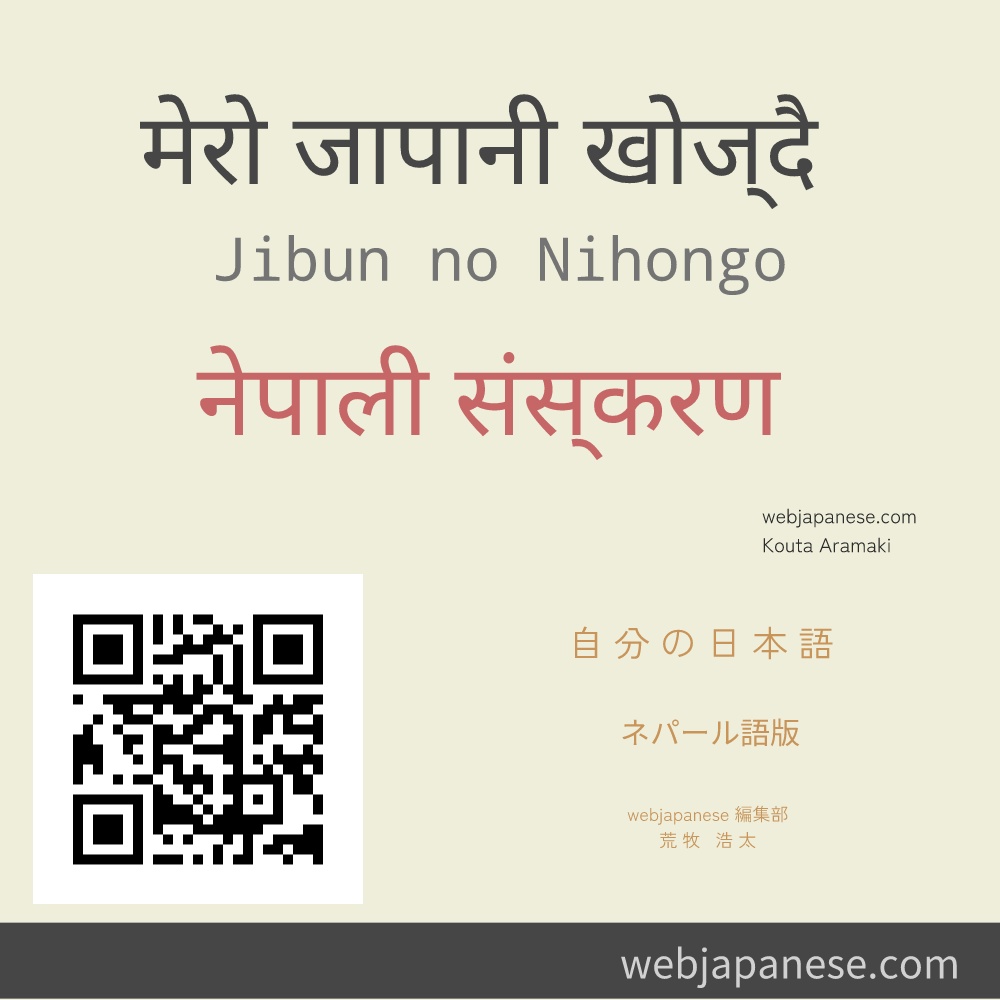
मेरो जापानी खोज्दै नेपाली संस्करण
- ダウンロード商品¥ 1,000
Jibun no Nihongo 自分の日本語
Nepali
यो पुस्तक “Jibun no Nihongo” को नेपाली संस्करण हो। “Jibun no Nihongo” न त पाठ्यपुस्तक हो न त अभ्यास पुस्तक। हामी यसलाई “AI को युगमा जापानी भाषा सिक्ने पूर्वाधार” भनेर वर्णन गर्छौँ। यसलाई पानी वा बिजुली प्रयोग गरेजस्तै प्रयोग गर्नुहोस् — विभिन्न उद्देश्यका लागि। सबैभन्दा पहिले, यस पुस्तकले स्प्रेडसिट प्रयोग गर्ने आधारभूत कुराहरू सिकाउँछ, र त्यसपछि AI र जापानी भाषा सूचीहरूलाई संयोजन गरेर सिकाइलाई कसरी अनुकूलन गर्ने भन्ने कुरा देखाउँछ। यसका अतिरिक्त, यस पुस्तकमा जापानी भाषाका डिजिटल डाटासहितको स्प्रेडसिट पनि समावेश छ। विभिन्न अध्ययनहरूका अनुसार, जापानी भाषाका औसत वयस्क मातृभाषीको शब्दसंग्रह करिब 30,000 शब्दको हुन्छ। यस डेटासेटमा 32,000 शब्द, करिब 2,000 वाक्यांश, 1,300 वाक्य संरचना, 1,500 निश्चित अभिव्यक्तिहरू, तथा करिब 3,000 कान्जी अक्षरहरू समावेश छन्। अर्को शब्दमा भन्नुपर्दा, यसले आधुनिक जापानी मातृभाषीहरूले प्रयोग गर्ने अभिव्यक्तिहरूको लगभग सम्पूर्ण दायरा समेट्छ। प्रत्येक प्रविष्टिलाई प्रयोग आवृत्तिका चार तह र सिकाइ कठिनाइका पाँच तहअनुसार ट्याग गरिएको छ, जसले यस डाटालाई AI सँग प्रयोग गर्न अत्यन्त उपयुक्त बनाउँछ। पूर्ण रूपमा नयाँ सिक्नेहरूदेखि लिएर अत्यन्त उन्नत स्तरका सिक्नेहरूसम्म, यो एउटै पुस्तकले जापानी भाषा सिक्न आवश्यक सबै डाटा र ज्ञान प्रदान गर्छ। यस पुस्तकको प्रयोग गरेर आफ्नो आफ्नै जापानी पाठ्यपुस्तक, शब्दकोश र डाटाबेस तयार गर्नुहोस्।
English
“Jibun no Nihongo” is neither a textbook nor a workbook. We describe it as “the infrastructure for learning Japanese in the age of AI.” Use it the way you use water or electricity—for many different purposes. First, the book teaches the basics of using spreadsheets, and then shows how to customize your learning by combining AI with Japanese language lists. In addition, this book includes a spreadsheet of Japanese digital language data. Various studies suggest that the average adult native speaker of Japanese has a vocabulary of around 30,000 words. This dataset contains 32,000 words, approximately 2,000 phrases, 1,300 sentence patterns, and 1,500 fixed expressions, as well as about 3,000 kanji characters. In other words, it covers almost the entire range of expressions used by modern native speakers of Japanese. Each entry is tagged by four levels of usage frequency and five levels of learning difficulty, making the data ideal for use with AI. From complete beginners to highly advanced learners, this single book provides all the data and knowledge needed for learning Japanese. Use this book to create your own Japanese textbook, dictionary, and database.